Wednesday, May 29, 2024

TBJ_10 Nebraska - Colorado - Summertime

Hello, the chronicler is sitting in one of the compressor rooms in the USA, i.e. in a poorly insulated, spacious motel room whose air conditioning makes quite a racket to keep temperatures bearable. You live by the difference, says friend Uli, so the chronicler takes it in his stride that the multi-coloured door frames are not intentional but due to peeling paint, and the residual puddle in the bathtub is also calm. Instead, he was able to position his racing bike in front of the room. There, where the elegant to battered cars are always parked in the films.

All right for a small price

The chronicler has arrived in Fort Morgan, another small town in the Midwest of the USA. His starting point for tomorrow, for Denver. Let's see what the clan is up to. He has won an hour for the second time in a short space of time. The one that is regularly bemoaned at home as the changeover to summer time. And he's now in Colorado, which he previously only knew in liquorice form. If Nebraska was treeless and flat, Colorado is also treeless, but by no means flat. A huge, gently undulating landscape of sandy soil from the Ice Age, which is used for agriculture with huge irrigation systems. Because the maize is still small, the tallest plants are sage bushes, which stand out from the barren grassland with their whitish light green leaves. Completely black cattle stand out as individual specks in this impressive picture.

The chronicler is so fascinated by the landscape that he doesn't feel like talking to the friendliest bus driver yet. Kati, who greeted him with a laugh in North Platte, said about the racing bike that she doesn't normally take such things with her, but today she had room. The chronicler had taken care of packing the rear end again and thought her remark was more of a joke. Kati drives for a company previously unknown to the chronicler. There are only four other passengers in the almost new vehicle. Finally, the chronicler sits down on the step to the driver's area, his bum behind the white line, his feet in front and his best view forwards. Kati thinks that's fine. To his right sits a black woman with incomplete front teeth, whom Kati always calls Nurse. 

The conversation dies down when the chronicler comes out with his question and Kati categorically points out that she is not allowed to talk about politics, religion and sex according to company regulations. It would cost her her job. Okay. We remain on good terms anyway!

Kati, twenty years on buses 

The chronicler would like to add something here. He slept very well in this carefully designed accommodation in North Platte and it also somehow instilled a sense of calm in him. Or perhaps the chronicler is slowly becoming more relaxed on this tour anyway. After all, he still had time, and for this he had created a local exploration in Google maps. Because he had read this on Wikipedia: North Platte has the world's largest marshalling yard, operated by Union Pacific. They built a tower, the Golden Spike Tower, to give him an overview. Golden Spike was the gilded nail that was used to close a famous gap in the railway line in the nineteenth century.

You can only build something like this in an area like here; sorry for the unproductive photo; the yellow in the foreground and on the left in the picture are just locomotives, about a hundred of them.

Down in the souvenir shop, the chronicler met customers Cheryl and Barry, who provided an answer in return for his story: 5-5-90. Chery presented and Barry mumbled that that was more or less his opinion. Maybe not quite.

Cheryl and Barry take a trip to North Platte; they live 120 miles further north

On the way there was a railway museum, which actually only consisted of two objects and a railway keeper's cottage, but was quite something. 

The chronicler was extremely grateful for this coincidence and for the friendly explanations of the keeper; they were alone on this beautiful site.

Monsters of steel

At this point, the chronicler makes an attempt to give a little more impression of where he is. And this small town of North Platte, which was so pathetically difficult to conquer, somehow appealed to him. What you don't usually find about places in Wikipedia, he read here: Information on average income. And in this city, the average is roughly 30,000 dollars a year. Knowing that a doctor in a large American city earns ten times that amount, he is overcome with a certain perplexity.

He has also made videos from his racing bike and hopefully the back office can integrate them.


First of all, the back office is closed tomorrow morning (CET) and will deliver later. See you there.

Tuesday, May 28, 2024

TBJ_09 Riding on the continent - 100 km workout

Hamilton Mack Laing rode his six hundredweight Harley Davidson Doppelwums through here long before the chronicler, in 1915. Sand and mud gave him a hard time. The chronicler also rode across the continent, but far more comfortably. Mr Laing would be delighted with the precise concrete track. He would no longer burn the insides of his thighs on the exhaust pipe because of the machine skidding around wildly in the soft sand. 

But the chronicler also had to suffer. He had a headwind, 100 kilometres of precise wind from the front. Not caressing from diagonally or as a blow to the side or sometimes as a slap on the bum. No, always full on the twelve. And so this day was not a cycling day in the usual sense, it was a hard workout in modern parlance. 

Blue line and wind; precise opponents

The chronicler has to cry here for once. That wasn't fair! Having 25 km/h wind against you or behind you is worlds apart! So.

It was no problem to find a hostel after midnight last night. The distances are so huge that beds, hot coffee and a beer are always and everywhere available. The bed was clean, the shower still had infinitely hot water and no colour peeled onto his toothpaste, although the ceiling looked like it. In the morning, he realised that the world ended at a wooden fence one and a half metres from his window. The Tamil family who ran the place were friendly. He ate only fragments of the continental plastic breakfast, went on his way and decided to take it easy today.

The clean, light grey concrete carriageway has clean joints. Nothing rattles. The surface is grooved lengthways, and drivers forgive it the use of the carriageway. The land here is so flat that, from a distance, the curvature of the earth is mistaken for a gentle hill. In fact, Google indicates an earth curvature of almost eight metres for a length of ten kilometres. And in the chronicler's opinion, you can see over ten kilometres. In his leisure time, the chronicler ponders the huge caterpillars with which geological development has proceeded here. Or perhaps it once roughly covered everything with soil, soaked it with water and spread the slurry precisely with two or three blows of the earth. It's almost eerily even. 

The huge agricultural tractors, the endless goods trains alongside the road and the massive grain silos give you an idea of what mainly happens here.

work, work, work

Before the chronicler switched to moaning and suffering mode today, he mused as usual. After all, you get bored, especially when there's nothing in the landscape. 

He drafted speeches, stupid stuff, ventilated relationships, praised the grandchildren up and down, thought about his customers and rehearsed the last chapter.

He waited four kilometres for this opportunity; a chance to lean his racing bike against something to take a break

He is happy about his invention of the hopon-hopoff. He remembers an acquaintance who travelled the Mississippi from its source to its mouth, a distance of around 3000 km. His answer to the chronicler's question about the three dominant characteristics of this tour was limited to two: boring and adventurous. The chronicler suspects boredom and doesn't need it at all. He doesn't need or want boredom in abundance just to eat up the kilometres. 

He writes these lines in Cozad, 3000 inhabitants in this flattened landscape in the Meridian Tap House over salad and coffee. Cozad lies on the 100th meridian. 

Somehow you always make it nice

Farmers, old people, families who want to have a nice day sit in silence and wait for these food baskets, lined with red and white chequered napkins, in which carefully decorated sandwiches with chicken, turkey, bacon or beef are served. They drink water or cola, always with ice, and whether coffee or a cold drink, each one comes with a straw. 

So, the chronicler has to move on, he only has twenty-six kilometres on the clock. Kristina, the boss, gives him her answer between paperwork: 10-10-80. She couldn't believe that Mr Trump could ever become president and thought the whole thing was a PR stunt. 

Kristin runs one of those charming, ubiquitous, non-chain restaurants

The wind is disgusting and the road is so miserably straight. The chronicler may not even look up in the hope of seeing an end. Each time, the sight of the grey line ending in flickering mirages in infinity is like a whiplash. Finally he leaves it. He also refrains from trying to keep the cut somehow presentable. He doesn't even notice when the road takes a slight bend after sixty-five kilometres. He simply takes another break, Crady, population 300, and a petrol station with a mini-market. It gives him the cheapest break yet.

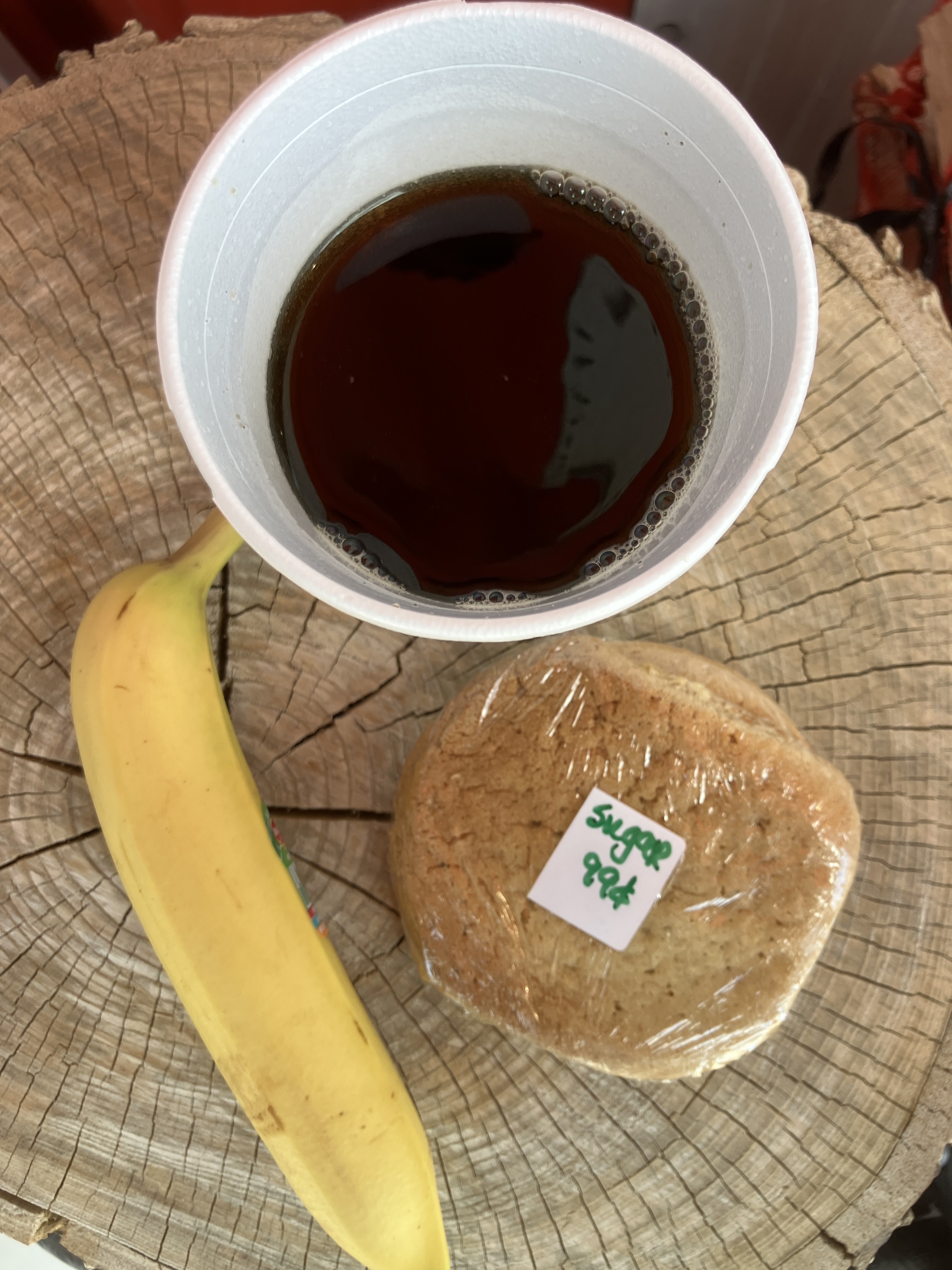
In Brady once full for three dollars fifty

He eats his purchase on the firewood packets for seven dollars a piece. The sight of the pub opposite is part of the change that is visible everywhere.

300 inhabitants are too few for a pub today

In the east, people tend to keep quiet, even in the countryside. But Tagg has a few words with the chronicler. He asks him about his purchase. Tagg doesn't split up. He credits everything to Jesus and will vote for Trump, who he believes has done a lot for the country.

Tagg is retired, lives in Crady and worked for the railway

North Platte is the name of the destination. Platte is the programme for this whole area. A central location for the railway. The only town in the surrounding county. The chronicler has a new experience. You can also find cheap and nice accommodation. A kind of cute motel falls at his feet. Nice outside, nice inside.

Manager Yonn

Yonn, with his friendly moon face, manages the business. The owners are from. It really is an extremely cosy and carefully run shop. After the business check-in, it's Yonn's turn. He finds the question strange, says he is not interested in politics and only becomes talkative when the chronicler asks what he misses most about politics at the moment. Lower petrol prices. In Trump's time, the gallon was two thirty dollars and then rose to two fifty dollars. During Biden's time in office, the price rose to almost four dollars and is now three dollars fifty. That's expensive for him. Yes, he doesn't like this liberal versus conservative debate either. If both parties were locked in a room, there would certainly be fights.  In the end, he offers the chronicler 50-25-25, who has the idea that Yonn, as a Native person, can't do much with Jesus.

On an impulse, the chronicler adds a single dose of relaxation bath to his small luggage at the drugstore at home. Almost all American bathrooms really do still have a bathtub. So does his cute motel. After this ordeal, he enjoys some blue relaxation soup today. 

https://www.relive.cc/view/vNOP7kdPX2v

Tomorrow he has until one o'clock. He will guide his audience through this small town. He is not familiar with this kind of thing from American series or films. 

In 1947, Jack Kerouac hitchhiked through North Platte in company on the back of an open lorry. Because the lorry had no side flaps and the road was bad, they were in constant danger of falling off.

Montana Slim and the two high school guys wandered the streets of North Platte with me until we found a liquor shop. They threw something in, Slim too, and I bought a bottle. Tall men with grumpy expressions watched us from houses with fake stucco facades; the main street was lined with square box houses. Endless vistas of prairie opened up beyond each of the sad side streets. I sensed something different in the air of North Platte, but I didn't know what it was. Five minutes later, I knew. We got back on the lorry and sped off. It was getting dark fast. We all took a drink, and when I looked around, the green fields along the Platte River had suddenly disappeared, and instead, as far as the eye could see, there were vast wastelands, just sand and scrub. I was amazed. "What the hell is this?" I shouted over to Slim. "This is grazing land, man. Pass the bottle."

Have a great day and good luck to everyone.

Monday, May 27, 2024

TBJ_8 Mountain festival and: Do you know Jesus?

Today is the chronicler's mountain party. He has completed his fifth tour. In Iowa, which could also be somewhere in Europe, except that Europe is not big enough for that. Everything is bigger in America, even the natural areas of the same character. Now, for once, he is already sitting in the bus and rocking towards the next starting point: Lexington in Nebraska. This bus route from Chicago to Denver only runs once a day and the chronicler didn't feel like spending the night in the state capital, Des Moins, only to be able to board the bus after six o'clock the next day. So he's moving on today in his cycling gear, unshowered, and will have to look for a hotel after midnight. Keep your fingers crossed for him.

The driver is the same one who very kindly took him from the Burlington interchange to Okaloosa yesterday. We shake hands like old friends.

Don, secondly, is a pensioner and has several cold-blooded horses trained by the Amish; the chronicler forgot to ask his question

You can't ask Oskaloosa to have a bus stop worthy of its name. But for the rather modern and wealthy town of Des Moins to offer such a small space six kilometres out of town somewhere next to a forklift dealer is a brazen disregard for the dignity of its users.

But first things first. Sometime yesterday afternoon, the chronicler got off the bus in a sleepy hamlet. The afternoon sun was shimmering in the air, driver Don wished him luck and sped off. There was nobody on the road. Sergio Leone would have immediately had a melody in his head.

Oskaloosa stop

In the absence of a saloon, the chronicler first went to the local drugstore and bought a nail clipper, which he desperately needed. The hotels were just outside the town on the motorway. Directly in front of the more expensive of the two, he got a flat tyre in the back, the unfortunate effect of which was compensated for by a nice room with a senior discount. 

The chronicler was not in a good mood yesterday, questioned his plan and its general usefulness and felt the rest of the journey was a burden. And he was also a bit lonely. That happens! And to the chronicler especially after drinking alcohol. After the tyre repair, a shower and a visit to the Walmart opposite, the world looked a different place. Deborah intercepted him at the entrance. She was there to greet the customers and had seen the chronicler arrive on his racing bike. After a brief exchange of information, he was declared famous and a colleague had to take a photo.

Deborah was exceptionally slim. She used to work as a nurse, now she is seventy and does this as a retirement job. She has two children and, like the chronicler, seven grandchildren. We were quickly on the same wavelength. She's a Native American, but unfortunately he didn't hear the tribal designation. Jesus gets 100%, Mr Biden is too old for her and she doesn't trust Mr Trump.

The chronicler repeatedly realises that meat-free food is hard to find. Everything has chicken or bacon. Finally, he can retreat under the white sheets with a vegan salad, cheese, a bowl of fruit salad and a hot drink from the room bar and regain his physical and mental strength. In the morning, it's also nice to skim through the blog prepared by the Todtenhausen back office. Running! And so he was back on top of his game this morning, partly because the hotel had a pool. 

In the breakfast room, he asked Larry if he didn't want to sit at his table. A little unsure what his wife would think of it, he sat down and Chris eventually did too. And then things got special. Larry took his wife by the hand and prayed, prayed for the food and for Detlef, the person sitting next to them. Both were here for a family celebration. And again the chronicler had come across customers who thought the connection to Jesus in this matter was absurd, almost immoral. "Do you know Jesus," Larry asked, causing him some embarrassment. "Jesus took all our sins upon himself with his suffering!"

And Chris stated unequivocally that only Jesus could fix it. For the earthly part of necessary rule, they will vote for Mr Trump. At the end, they said a fond farewell. They had to go to church, Larry: "Jesus may not have a timetable, but the church does." They will pray for the chronicler, wished him well and he was grateful for that.

Cris and Larry with the chronicler at the Fairfield Inn in Oskaloosa, Iowa

Dear Larry, the chronicler can't resist a comment that popped into his head on the highway today. Sorry for his big mouth. Yes, it's probably meant that Jesus takes away our sins. That in itself is an incredibly difficult task. Isn't it considerate to refrain from venial sins so that the burden doesn't become too great? And isn't overeating and eating unhealthy food also a sin, albeit a small one? I could imagine that he would be proud if his followers were self-confident and responsible with their frames and thus neither became a burden to others nor waddled through life overly deformed, even in old age. Sorry.

The patched tyre has kept its shape and the forecast rain has been thoughtfully brought forward. Today is Memorial Day and the spacious motorway is sparsely populated. 

Counting to ten, the chronicler cranks past two police cars parked on the central reservation. No wailing sirens, no flashing blue lights. The officers remain seated in their fat Dodges, watching the Sunday service on their tablets or perhaps sex films. In any case, they don't seem to think the chronicler is game to be hunted. 

Legal! Racing bike on the highway; For Dave Jackson, the owner of a 1960 Cadillac Sedan deVille in the colour Persian Sand

Iowa is clean, the highway without dirt on the shoulder, no rubbish on the roadside, the farms don't sink into slurry like he saw in England. To avoid erosion in the undulating relief, the farmers leave strips of permanent green parallel to the slope.

Gentle soil cultivation

What irritates the chronicler are the huge lawns around the estates. They are as big as golf courses and the lawn maintenance is the same. For the chronicler, it is unimaginable to have to mow such areas. But it also seems to be for relaxation: Whizzing across the grassland on a ride-on lawnmower of the municipal vehicle category with ear defenders. Elsewhere in the world, the most intelligent tricks are used to save energy. Here, perhaps we could simply think about not mowing an area of fine turf the size of Lower Saxony every ten days.

The chronicler has to admit that it looks nice, cultivated, just as the houses are well maintained and the car park in the open carports is at least three-part.

Almost all the houses have this style; as a village pub, it is an exception Smokey Row Coffee Shop in Pleasantville

The chronicler is lucky again for his lunch break. A village in the middle of nowhere. The only shop open has charm, the food is delicious and the children who run it do a good job. His attempt to get rid of the disgruntled, taciturn red fox's question fails miserably. No reaction. In the end, he just thanks the chronicler for correcting his opening hours on Google Maps. According to this, the shop was closed on Sundays.   

Because he doesn't like to come across as cheap, the chronicler had pumped up this tour from the more direct 90 km option to what he considered to be the appropriate minimum length of over 100 km. This diversions is also nice, but has the disadvantage of being a secondary route that has simply been laid on the relief like a grey sash, while a mountain has to be removed for a highway.

Up down, up down; Memorial Day flag at the cemetery

Des Moins, a picobello refurbished state capital, spacious, new pedestrian walkways, decorated with flowers; the restaurants and brewery pubs are well-staffed. Somehow the towns here in the Midwest seem to be reinventing themselves. 

New two-part pedestrian and cycle bridge

https://www.relive.cc/view/vevY3Y7kWJ6

At this point, the chronicler would like to point out that he had at least two predecessors on this route, who followed it in quite different ways and at different times. There will be countless, but he only knows of these.

Hamilton Mack Laing, Riding the continent, a Canadian nature lover and biologist, who came this way on a Harley Davidson in 1915, at a time when the roads were still made of sand or mud and he had to trudge through them. His daily stages were often no longer than those of the chronicler. When the roads were completely inadequate, he also used the sleeper-gravel track between the railway tracks, observing the respective timetable. He shunned the hustle and bustle, slept in the countryside next to his motorbike under a canvas tent that he attached to it and was happy to hear the birds singing in the morning. He knew them all. 

The other, far better known, is Jack Kerouac with his book On the road. An eloquent description of a wild departure westwards as a hitchhiker in 1947. The chronicler remembers that in the seventies this book was often found lying around on white lacquered bedside tables alongside the joint cutlery and the Mao Bible. At the time, the chronicler was reading Johannes Mario Simmel and, as a severely school-impaired person, was enthusiastic about the attempt at educational reorganisation in England's Summerhill and had a great time with Asterix and Obelix. 

Tomorrow he is meeting Jack in North Platte. In addition to Simon Geschke, the chronicler's partner and friend has also given him Jack Kerouac as a digital reading book. And he's at the very spot where the author was stranded for a few days in North Platte.

Until then, it's a good read.

Sunday, May 26, 2024

TBJ_07 The bike has to be in a box!

A phrase that has immediately given the chronicler high blood pressure since it entered his vocabulary in 2018. This time it's serious. He's riding with Trailroad. Another company that won't let it run under any circumstances and the driver isn't being malicious, just rule-abiding, so they're not allowed to transport the bike. The chronicler panics, sees his plan evaporate and the West disappear into the fog. So they fight. Maybe the counter has boxes. It doesn't, and the black woman there, whose appearance dates back to the time when she was on tour with Aretha Franklin, doesn't care much.

At the gate, he shows the driver the large plastic bag lapping over the edge of a large rubbish bin. Would that be ok? He nods. Without further ado, the chronicler tips the rubbish into another bin and Scott's bum into the bag. The driver nods again. The bus is clean, equipped with modern screens and quite full. It has worked, but somehow bothers the chronicler.

Hopefully the transfer driver is also happy with it

He has to change buses once and is curious to see what the next driver has to say. Now, during the break, he is sitting in the deepest Midwest in a locally run restaurant, surrounded by huge car parks and the 24,000 inhabitants that make up Burlington. He has three hours to tell you all about it. Don't worry, it won't be too much.

This is the first time he has skipped a day, as announced. He had an appointment with the sister-in-law of an old friend, Sabine. 
From the in-house reading room on the fifty-sixth floor

Not only did she put him up in her spectacular flat on the twenty-eighth floor, right on Lake Michigan. She did his laundry, gave him his monthly injection because she's also a doctor and took him out with her lively boyfriend Alan. It was fun and interesting and late at the end. Thank you Sabine, thank you Alan. He had to get up again at five in the morning to get to the bus station.

Alan and Sabine discuss the question

Alan thinks quickly. In response to the chronicler's question, he rattles off: 100% Jesus. Politicians are incompetent. They have organised the economy in such a way that the ratio of CEO salary to average income has risen from one to eight to one to fifty since the seventies. It has failed to provide more paid leave, paid maternity leave, and health insurance. and today has the record of 120,000 drug deaths from last year on its hands.

Alan is also a doctor, will vote for Mr Biden and is preparing a speech for a Harvard alumni reunion this weekend. Sabine has seven-day shifts and currently has four weeks off. As a German, she is staying out of the topic, but seems a little piqued that Alan also sees certain necessities in politics from the Trump toolbox.

At the start in South Bend yesterday morning, the chronicler had another part of society on the hook.

Rick and Jim do business over breakfast

Rick and Jim like to be disturbed, realise what he wants and come round the corner with 20-20-60 and ⅓ - ⅓ - ⅓. Rick says that if we have 60% Jesus in us, the remaining, necessary 40% will inevitably work well. The chronicler forgot to ask for their personal details. Sorry.

The cranking was fine. The traffic was bearable, at times he could use the brand new carriageway alone for kilometres in the roadworks area.

The chronicler would probably know a few candidates

Flat land and a tailwind. Agriculture dominates here. Covered in dust, farm tractors rush over the huge fields, which would delight the chronicler's grandchildren. House-high red Case machines with four equally large rubber track drives, oversized triangles on the sides for propulsion and low ground pressure. 
The sun is shining, he stupidly leaves Michigan to the right. Why not take a look over a cup of coffee? After a break, the sky turns pitch black as we head north. Even the chronicler's heart sinks. At the last minute, he takes refuge in a rusty industrial building at the side of the road. Lucky for him.

Torrential rain around Chicago

Large equipment for specialised civil engineering is repaired between oil drums and tool benches. Machines for the foundations of high-rise buildings. Always hard and noisy dirty work. He doesn't understand much of what the people explain to him in slang and at high speed. The sky is colossal over the hall. In such a way that the chronicler would have barely survived in the wild, but would have been rendered useless for days. The parts of his equipment forever. There was enough time to interview Casey before the road was passable. He is married, has two girls and appears to be a chief mechanic. 


Casey, 25-25-50

The men bid the chronicler farewell with best wishes and warn him of the town's youthful gangs.

The almost forty kilometres to the city centre lead past tank farms, gutted steelworks corpses and large, steaming industrial plants. Chicago is not so easy to conquer. Firstly, there were more than 140 kilometres between the starting point and the destination and secondly, and this is something the chronicler has never experienced before, the blue dot goes crazy in the high-rise canyons, wandering back and forth uncontrollably. It only finds its way to the hostess via the traditional method of orientating itself by street names. He has not been shot at or robbed.

https://www.relive.cc/view/vYvE2kB5LGO

PS The chronicler doesn't want to leave out Etienne, who is sitting next to him on the bus, travelling to Davenport, Iowa, looking at him from the side with a mixture of disbelief, mockery and joy in his face. Etienne wants to know again and again why the chronicler is doing what he is doing. Is he a journalist? And he doesn't accept the question. You can't compare anyone with Jesus or even use parts of him.

He has four small children and answers evasively to the question of what he does for a living with factoring. He is of the opinion that politicians only serve their own interests. He has no idea and doesn't want to. He accepts what comes. What does it look like in Germany? The chronicler thinks well and adds that many people still complain and lament. Often unjustified, in his opinion. And Etienne is not dissuaded from his opinion that the people are right. If the politicians don't work properly, the people will clearly recognise this. He and the chronicler cannot come to a common denominator. But after this special hour, Etienne is at least convinced that the chronicler already knows what he is doing and can let him go in peace. At the next stop, Etienne can't be dissuaded from buying him coffee and chocolate. Thank you!

The chronicler showed good will, supplemented the bin liner with household foil from the dollar store and so the Scott disappeared into the bus cellar without any discussion.

Super. Do it well.

Friday, May 24, 2024

TBJ_06 To Chicago

Dear readers, best wishes. All the best for whatever everyday life demands of you, or you of it. The chronicler is back in the Greyhound, gently rocking and enjoying the sun, the fresh green early summer landscape, the warmth and the unobstructed view from the window.

Free view in Ohio

His racing bike is in the cellar, nicely anchored with a new rubber tensioner from the Shoulder of Highway No. 119. The old one had been round the world once and had simply worn out. Quincy, the rider, is not interested in a luggage ticket or a box. He is black, endearing and the condition of his front teeth matches that of the company. His greeting and recitation of the rules for passengers is more of a chant. Of course, smoking is not allowed in the vehicle. But he also makes a point of not even rolling joints in here because he doesn't want the smell.

The chronicler has to change trains in Toledo to arrive in South Bend in the evening. His starting point for the next big city conquest: Chicago, for which he has to crank almost 150 kilometres the following day.

He is reporting live again today. Pittsburgh has been very kind to him. He leaves the beautiful room with melancholy. This time he even has real cutlery for breakfast and a lightning survey with Daniel.

Daniel from North Carolina, on his way to a training programme at his company, 5-0-95.

Too bad he's in such a hurry. At this point, the chronicler says goodbye to the pictures and instead tries to portray the other person as well as possible and also tries to find out more than just the three numbers. Otherwise it will be boring for you and him. If you have any other requests, let me know. 

Pittsburgh still has a real greyhound station with real gates from which you can get to the respective vehicle. Only Philadelphia was that horrible. All the other stops had earned their names, from small houses in small towns to halls from better days.

Greyhound station Cleveland + Quincy as driver; something has to happen here: the toilets are an imposition, the standard clocks on the walls each show a different time, the paint falls in large flakes from the ceiling of the terminal

Someone in the upper echelons of the company has no desire, no idea and perhaps no money. In any case, the staff on site do their best, are friendly and try to keep things running smoothly. 

With the Cleveland stop, the chronicler is almost in Canada. The city is located on Lake Erie, which for the chronicler is forever associated with John Maynard. At least he was somehow still able to follow this poem at school. Which he failed to do to the point of utter despair with "Spring lets its blue ribbon..."(Poem by Eduard Mörike).

Quincy drives on in Toledo without him, but not without his best wishes. Because there is still an hour left until the connecting bus and because he has his racing bike with him, the chronicler uses Google Maps to guide him into the city centre. And is surprised by a clean city, bursting with modernity and respect for tradition.

Once Toledooledo 

Toledooledo was probably traditionally a centre of glass production. The chronicler does not know what is happening now, but a lot of money is visibly being earned and invested in good roads, bright, smooth footpaths and cycle paths, parks, museums and a symphony orchestra. What he misses: the city is somehow deserted. Where are all the 300,000 inhabitants? 

The bus station is part of the Amtrak railway station, whose ticket office is only open at night and which only has one track still in operation...! Waiting with him are a black couple, a black woman and a white woman who has brought her son here. What they have in common, and this has shocked the chronicler again and again in recent days, is the complete loss of many people's own figure. They are nothing more than containers, held together with great effort by their skin, filled with the remodelling and decomposition products of excess food. He knows why, because he can observe the use of food everywhere. The UN has a world food programme because malnutrition is life-threatening. Perhaps it will one day be necessary to draw up a separate nutrition programme for the USA. The chronicler can imagine that the type of diet commonly used here is no less life-threatening ;-)

The second surprise is the black female driver of the connecting bus, who is also heavily overweight, and who verbally pummels him for not having registered the bike. And they wouldn't transport bikes anyway. The chronicler has to pay twenty dollars extra, actually twenty-two, but he doesn't get a receipt. She takes him listlessly but safely to the next state, Indiana. 

Rory sits next to the chronicler. It takes him a while to get going. But then he's glad he did. Rory is on his way to Chicago. There he will be a judge for a high school competition in spontaneous acting, writing and presenting short speeches and similar tasks. He decides in favour of 12.5-12.5-75. Why? Yes, he has no idea about politics, but as an Irish Catholic he is sure of Jesus. Yes, he is going to vote in September.

Rory, twenty-one

Apart from the stopovers by bus, the chronicler skipped Ohio. But that doesn't matter. Now he's in Indiana, at the starting point of South Bend and back in the lap of luxury. A luxury that the receptionist has thoughtfully provided for him with a few words of German and an unbeatable discount. He still can't believe it and almost fears the inevitable crash. Things can't go on like this. Fifth floor, modern, view of the city from the bed, another very clean, modern city and a city without a crowd.

South Bend, also deserted; perhaps everyone is in Indianapolis for the 108th Indy 500 and the flagger is also just setting off

Not only does the receptionist find him a nice room, she also sends him to a bar that he would never have found or visited from the outside. He is well looked after with stew soup, salad and IPA. The latter a strange tasting type of beer. A mixture of fruity and quite bitter. 

Nicki, the waitress, gives him 40-40-20 and believes that her heart's desire, respect for all LGBT people, is best left in the hands of Mr Biden.


Nicki from the Oysterbar

Until tomorrow, maybe the day after tomorrow, because tomorrow the chronicler is lucky enough to be back in familiar hands. He is spending the night in Chicago with the sister-in-law of an old friend. And she has announced a programme that may prevent him from reporting afterwards.


PS He writes these last lines in bed. His two-piece travel memo on the duvet. The iPhone is on the Holy Bible. Otherwise it would fall over in the soft fabric. He would also have liked to use "The Book of Mormon" for a change, but it doesn't work with its flexible spine. It probably makes no difference to the content.


Thursday, May 23, 2024

TBJ_05 Vrooom, Toktok-Toktok - „You can‘t cycle on a Highway“

Life is good. Especially when you've had a shower, are lying under white sheets in a nice, spacious hotel room and have a hot drink next to you. You can guess from the picture what the chronicler means. He doesn't want to show off, he just wants to show what his (affordable) carrots are that allow him to endure adversity. And there was plenty of that today. The chronicler has been cranking away all day and has to retell the story. And first of all: there was no excess time. Everything fitted together seamlessly.

Simply beautiful; search picture with racing cyclist in the bathroom

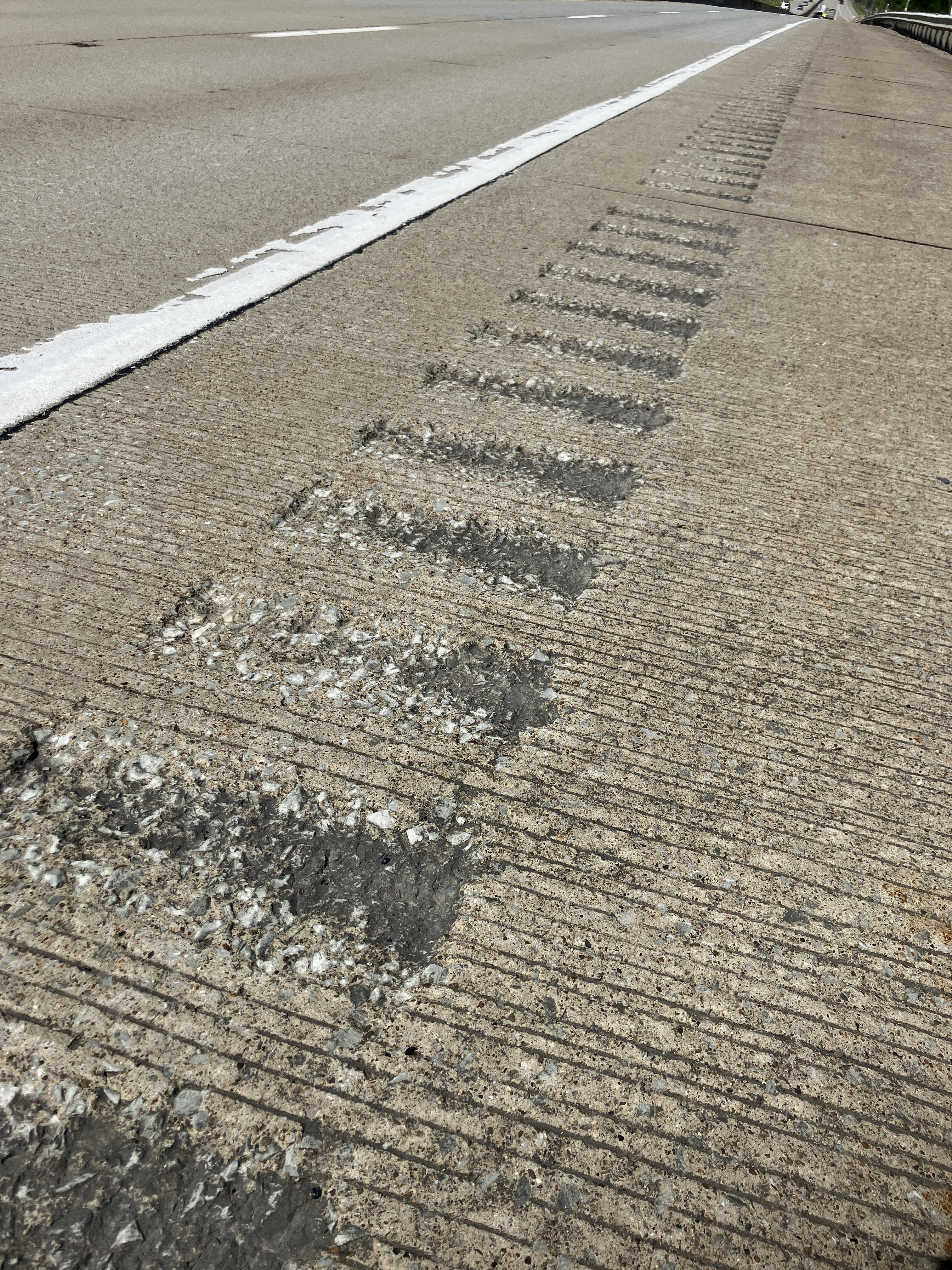
It was interesting from a presidential point of view, but he wanted to deliver the route description first. He had to get onto the motorway straight from his castle bed. According to him, a motorway, the highest category of interstate is intersection-free and No. 119 was not. Of course, there is plenty of traffic on these metropolitan routes. The chronicler is used to that. What he is not so used to is the spatial division. In North America, you don't drive on the carriageway, but on the shoulder. This is usually a fairly wide strip next to the white markings. A rumble strip is then milled near the carriageway to bring the dreamers among the drivers back on track.

On the rumble strip, the wheel steering beats like a machine gun

So the strip to the right of the rumble strip is more of a collection point for ballast stones, rubbish, animal carcasses, screws, exhaust residue and load parts. That's why the chronicler likes to stay in this reasonably clean but fairly narrow strip between the white line and the vibrator. It works quite well, but you have to be careful that sometimes the construction joint next to the white line is poorly filled or not filled at all and then likes to suck in the narrow racing bike tyre like an Italian earthquake fissure. So, that was a bit much detail, but it kept the chronicler busy for the whole 100 kilometres. Vrooom, the traffic is an imposition, which is why the chronicler can only do this alone. It doesn't really bother him. After all, he's not alone in the world. And he also notices that most drivers, especially the big lorries, are quite considerate, almost British in their politeness. Not all of them. It's comforting that they're not allowed to drive much more than 100 km/h, although this causes quite a racket with the large roadtrain-like lorries, especially when they use the engine brake. 

On the motorway through hilly terrain

Because the carriageway is mostly made of concrete, it has a bit of the character of the old Reichsautobahn: Toktok-Toktok-Toktok. It is neat and tidy. There are houses with direct access next to the motorway. Their huge lawns around the house are perfectly mowed right up to the edge of the road. Unlike in the west, unusable household goods or vehicles are not simply left on the property to be overgrown by nature. 

There are quite a lot of carcasses on the carriageway, flattened fauna. Sometimes you don't even realise what's lying flat. You can tell from the teeth whether it's a predator or rodent, and from the shell whether it's a bird or a quadruped. Because they are so unrecognisably flat, pity has also disappeared. This is quite different with large animals, such as deer, which are usually still quite whole and are probably cleared away before they are completely flat.

Fortunately only a polyester

The chronicler had a lot of respect for this section because of its length and the 1600 metres of elevation gain indicated. But that somehow disappeared into thin air, even though he still had a headwind. Either it was too mild or the air is thinner here, but it didn't bother me much and the uphill and downhill sections were rather gentle. That's what's special about North America, that the roads have a fast layout and you can just lie down on the handlebars and let it flow. Nevertheless, this constant up and down will spoil the chronicler's cut. Physics with the square in the resistance takes care of that. 

And so it went reasonably well. The sun warmed his porridge and scrambled eggs from breakfast from behind in his black cycling shorts. The Scott crackled along light-footedly and at this point he had to thank his friend Uli, who checked the technology and brakes again and put a more robust tyre on the rear. Thanks for that. 

https://www.relive.cc/view/vmqX3Qdo7o6

But that didn't save him from getting a flat tyre twice, preferably at the back. Once perfectly with a bench seat in front of a self-storage unit and two charming black women inside. One of them asked who had got me that. The chronicler pointed upwards. She replied, yes, someone wanted you to take a break. In the end, it was enjoyable and successful. The chronicler's repair skills were not successful, because after a few kilometres the tyre was flat again. This time in the bushes. He finally managed to fix it.

Must also be sometimes, keep tidy

Before he could conquer the former steel metropolis and sports city of Pittsburgh, he received what he thought was an unjustified reprimand. A pickup truck from the parks department pulled up next to him and the black driver explained quite angrily: "You can't cycle on a highway. He can and, according to the internet, is allowed to, but he didn't want to provoke his hosts. Google Maps had an alternative and delivered him to a clean, interesting and somehow beautiful and quiet town.

Pittsburgh, he will have to skip the Andy Warhol Museum, without much regret

Asking him once took him to Marketsquare. It had a lively restaurant. The food was good, he dared to have two Yuengling beers, which lifted his spirits even more, and then finally found his way to this lovely bed. But only after he had repaired the hose in the sink.

What was going on presidential style? There wasn't much going on at breakfast in the Inn. The elderly, heavy-set lady at the next table wasn't really keen on the idea and was still pretty damaged from an operation. She doesn't like Mr Trump, but her husband does, although he is slowly changing his mind. 

The lunch break was completely different. The chronicler had seen a restaurant at a traffic light and was really impressed by the place. A perfect example that there are also good shops away from the chains. He ordered a Coke, which did him good for a start. Christa, the waitress, not only served him the Coke, but also water and a bowl of homemade potato crisps.

The Cesar salad with it cost just as much as the green plastic tea in the met

The chronicler took heart and asked Bryan, the boss of the shop.

Bryan and Christa. Jesus comes first with absolutely 100%, and Trump should become president

Bryan wholeheartedly wishes him a good journey. When paying, the chronicler quickly asks Christa, the waitress. Jesus doesn't need to be chosen. He's there anyway. She wishes for Trump. Petrol prices of around four dollars and milk at six dollars a gallon is a problem for many people. And Mr Trump would have taken great care of that. And so the chronicler leaves a shop that is run with passion, discipline and professionalism and is a focal point for the mostly elderly people in this rural area, providing them with affordable food. The operators will vote for Mr Trump. 

Tioni, one of the two ladies from the self-storage, 2-5-93, delivers a completely new mix.

Tioni 2-05-93, also wishes the chronicler a good journey

Good night everyone. Tomorrow is another transit day on the Greyhound. This time with a change of trains. Let's see.

Wednesday, May 22, 2024

TBJ_04 In a high-capacity taxi to the province

Hello everyone, the chronicler can report virtually live. He doesn't have to crank. His first transit day in the Greyhound. The opportunity to relax. He's just wondering who else is on the other side. After all, everyone has their own little packet to work through and he doesn't have anything as sensational as a presidential helicopter crash to offer. He will therefore ask his back office in Todtenhausen for a few screen shots of the blog's statistics functions. So make an effort!

In the morning, with the hotel's generous breakfast offer of a coffee and a gumdrop in his hand, he quickly asks two hotel guests. Juana and Olivier. She's from Spain and he's from France, so why not give foreigners a chance? It's not that quick. Juana keeps out of it. Olivier doesn't believe in feelings in politics, so in the end Jesus comes away empty-handed for the first time: 10-90-0. The chronicler thinks of Willy Brandt and can't imagine that his particular success wasn't fuelled by his feelings. Perhaps developed during the time when he was locked out of Germany and had to live in exile in Norway. Oliver also considers Trump to be an incompetent politician (thinking of his teeth, the chronicler prefers not to use the original expression. His blog is also in English and he willingly distributes the link here too). Olivier baffles him with the question of what distribution the chronicler would award and leaves him speechless. He won't publish his answer here for the time being. Which has nothing to do with the teeth.

Juana and Olivier, the charm of travelling alone: you approach others; not in the picture: the lovely couple at the next table from New Zealand

Philadelphia is a city of millions, a metropolis. Its bus interchange is a 50 metre long, lice-ridden and potholed cul-de-sac in an abandoned industrial estate. No bench, no shelter, no one to clear away the rubbish. In the words of his favourite LIDL advertisement: You can do it that way, but you don't have to! You can tell from the people waiting for the buses with the chronicler that they don't make a very significant contribution to the gross national product. Nevertheless, it deserves more than a bus stop that looks more like a drug parlour. I hope the mayor somehow reads this and should also learn that travelling by bus is not cheap; the chronicler pays $100 for this 300 km trip.

Also a way of avoiding waste: Pointing the camera at the sky. Not the chronicler's bus in the picture

The vehicle is no consolation for this inconvenience. Because it is still of the rather low variety, its cellar is not suitable for transporting the racing bike standing up.

The nightmare sentence from the old days: The bike has to be in a box! Actually, says the rider

But the black female driver is not interested in whether he has a ticket. With five passengers, it's more like travelling in a large-capacity taxi. No wonder, when the conditions are so unappetising. The seats are well spaced, clean and comfortable, only the striped outer windows don't allow much more of a view than from a prisoner transporter. The chronicler is surprised by the area: the highway winds through a hilly, lush green landscape that almost reminds him a little of the Kassel mountains (for the English-speaking part: a landscape along a notorious stretch of motorway in central Germany ;-)) 

Behind striped curtains

Alone and without a specific task, the chronicler often wavers in his assessment of what he is doing here and hopes to be at least somewhat entertaining. Yes, why is he doing this? You could also ask the counter question: Why not? Why not be independent, quite free, with curiosity and a willingness to make an effort, while obviously travelling the world without protection? 

He occasionally thinks back to this encounter years ago in his favourite Bavarian café, the Tortenkaiser Winklstübl. Of the old man at the neighbouring table with whom his son made one of those rare trips away from being alone. "When you're as old and immobile as I am, you only have memories to live on". Yes, the chronicler thinks, and it's good to have a good supply.After all, he still has his pet, which is probably more likely to do him in than the usual biological decay. In such a shortened future, it's best to do what you can. And you do it as well as you can and with all the love you are still capable of. Just don't save money at the wrong end.

Now, after the first few days of this special tour, where his trousers are still flapping due to the duration and effort, he realises that there is something else besides encounters, sore muscles and meatballs: Education. So he is very grateful to Alain for his reference to the president at the beginning of the seventies, Richard Nixon. A tough dog, a person about whom a competitor once said: 

His lies will be remembered longer than his legitimate work. He was the most insincere person I have ever met in my life.

You can find that in Wikipedia and you can also find the interesting hint that his arch-enmity against the media and political establishment and his populist way of speaking provided the intellectual background for Mr Trump or Boris Johnson. Yet he did extraordinarily solid things during his time in office, such as a first Environmental Protection Agency, an Occupational Safety and Health Administration and a completely new approach to dealing with indigenous people. At this time, the chronicler was still in his nappies in terms of his personal development and was also subject to the strong influence of left-wing anti-war activists (the USA was at war in Vietnam). And so his opinion of Mr Nixon was limited to the offhand remark: Nixon does w..... too. 

Alain's comment was aimed at the chronicler's assessment that there used to be more love between people. But if that was the case, he wondered, how could a person of Mr Nixon's character achieve such an overwhelming majority for his presidency at that time? Yes, why?!

Meanwhile, the person in front of him on the bus has woken up. Of course he will answer the chronicler's question, but he wants to put God first. In his order and his own currency, it's Jesus 110, Biden 80, Trump 75. There's no reason to make fun of him. Somehow, this distribution seems to the chronicler to be reasonably balanced. In the order and counting method used here, it would have to read 42-30-28.

Darryle

That's almost everything today. In the small town of Ebensburg, the amiable bus driver has let him out. While he is cleaning his racing bike out of the cellar, she lights her cigarillo again for the third time, takes a few puffs, stubs it out again at the kerb, gets back on with a "Take care baby" and rushes off in the almost empty vehicle. The chronicler is surprised by the cleanliness of the town, by the old houses made of red brick or wood. Not at all his image of America, which he had formed more in the West. There is a pub with a pretty good and affordable menu. However, as is so often the case in such places today, there is a lack of life in every corner. 

The chronicler has to leave the village for the night and take the four-lane main road. He finds accommodation in one of these inns, rooms the size of double garages. So he takes his racing bike inside. The beds are so big that families of four could sleep in them. They are also piled high with pillows, enough for entire school classes to have wild battles. The chronicler will never learn to categorise sizes again in his life - what is queen and what is king? He enjoys himself. See you tomorrow. Stay cheerful.


TBJ_99 I did it my way (even on a highway)

Dear followers, one last post from the chronicler. Whoever has travelled this far. It's great that you're here. You don't like b...